


International Women’s Day 2026: UK women in cyber speak out
March 8 is International Women’s Day. SC Media UK has interviewed eight women in the industry to find out how they got into cybersecurity, asking what issues they still face, and what needs to be done to change things for the better.
Dr Chidimma Opara, Lecturer in Computer Science at Teesside University
Dr Chidimma Opara ended up working in cybersecurity through curiosity. “Growing up in Nigeria in the early 2000s, I loved maths and science, and it seemed engineering was going to be the best option,” she says.
But then her dad brought home a desktop PC, and she was hooked.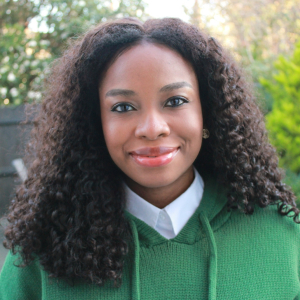
Early on, she faced challenges with visibility and guidance. “I didn’t have many women who looked like me and who were ahead of me in cyber to learn from,” says Dr Opara.
She therefore learned by trial and error and probably missed opportunities she didn’t even know existed. “For example: I entered my MSc thinking network security was the path, and only later realised my strengths sat more in data security. With a mentor, I would have shaped my choices earlier and more strategically.”
To make things better for women in the industry, Dr Opara hopes for more entry points and visibility. “Fund short, flexible training routes, like Teesside University’s CyberPathway, plus apprenticeships and internships that value transferable skills from law, psychology and business, not just traditional cybersecurity degrees.”
Dana Simberkoff, Chief Risk, Privacy and Information Security Officer, AvePoint
Simberkoff has witnessed first-hand how the industry has evolved. “My journey started when cybersecurity was still an emerging field, and there were very few women around. Today, I see a more diverse landscape, but the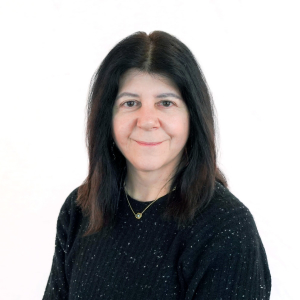 re’s still work to be done.”
Simberkoff has a law degree, which has helped her reach the position she’s in today. While she did not become a practicing attorney, her law degree has been useful throughout her career.
She describes how she became involved in cybersecurity when her organisation was tapped to work on operations security projects for a number of US Department of Defense customers.
Simberkoff has been fortunate to have mentors and managers who “believed in me and helped me achieve”.
But she knows this isn’t the case for everyone. “Women tend to believe that if they work hard and keep quiet, someone will eventually notice. You need to make sure that leadership is aware of your work and accomplishments and do so in a way that is not boasting, but rather informative and helpful.”
Amelia Hewitt, Consulting Director, Principal Defence
Hewitt’s first role was in her own words “a baptism of fire”.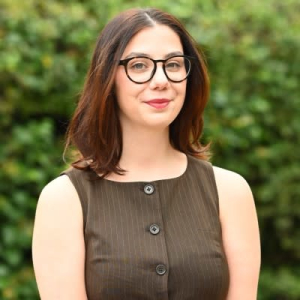
“In my first week, my manager leadership bluntly told me I was a diversity hire: A comment that was jarring but oddly clarifying so early in my career. It undoubtedly knocked my confidence at the time given I was so new. But it also sparked a determination to prove, most importantly to myself, that I belonged in the space.”
As she’s grown in seniority, Hewitt has experienced moments of imposter syndrome. “Looking back, it was often just the natural discomfort of stepping into bigger responsibilities, especially when that has meant exceeding peers. With time, I’ve learned that those feelings don’t signal a lack of capability.”
Hewitt thinks it is outdated to assume that all women are primarily motivated by maternity-related benefits. “Many of us are equally, if not more, concerned with access to skills budgets and clear progression pathways.”
Nikki Webb, Director, Custodian360
At the start of her career, Webb was very aware that she was often the only woman in the room. “In the office, boardroom, conferences, it was never wasted on me that technical questions and answers were more often than not directed to the male colleague stood next to me. It is still now to this very day often assumed I am just sales. It’s frustr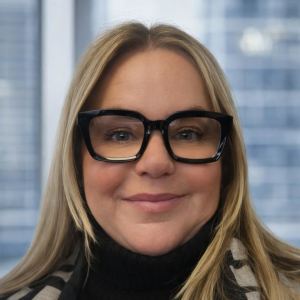 ating for sure, but I love a challenge.”
She recalls a meeting many years ago where she was described as “too direct” in a negotiation. “A male peer behaved in the exact same was as me and was commended and praised for being decisive.”
“It has taught me to read rooms really quickly. I have learnt when to push and when to hold my ground.”
Today, there is still bias out there, Webb says. “I think it is quieter, but it is still there for sure.”
She thinks menopause is a topic that’s not talked about enough. “Our industry is always on, high pressure and even bigger stakes. It hits all women differently, but for me brain fog, sleep has become a distant memory, and anxiety is so high.”
“None of these symptoms pause when we log on in the morning, or you are in the middle of an incident. We do not speak up for fear of being seen as less capable or a problem, but I would love to see this change for future generations.”
Rebecca Taylor, Human Intelligence Researcher at Sophos
Taylor studied English and Creative Writing at the University of Portsmouth, fully expecting her futur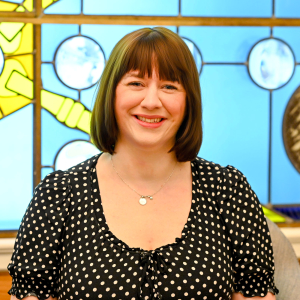 e to be in teaching. Everything changed in 2014 when she was unexpectedly headhunted to join Sophos, then Secureworks, as a personal assistant. “What began as an administrative role slowly opened my eyes to a world I hadn’t known was accessible to me. With the support of mentors, sponsors, and a great deal of learning on the job, I began to see that there was space for me in the cyber industry and that I could genuinely thrive there.”
Now, 12 years later, Taylor is a “proud member” of the Sophos Counter Threat Unit where her role is split between knowledge management and process design, and human intelligence research. “I have mentored shy of 200 women now across the cyber industry and of those, a large percentage are either University students looking to land their first roles, or career switchers.”
The issues she hears most frequently are that they are struggling to find entry level roles with reasonable levels of experience, or they cannot see where they fit. “This to me is a reflection not of their ability or potential, but of an industry that still too often lacks clear, welcoming pathways and visible role models for those coming in from non-traditional backgrounds.”
Sam Jennings, Head of Operations, Avella Security
Jennings studied Business and Finance, before building teams in a West London advertising agency, learning how organisations succeed through relationships, communication and operational clarity.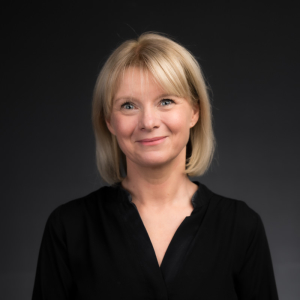
She moved into cybersecurity two and a half years ago through a networking conversation. “Importantly, I was welcomed. The partners at Avella saw value in what I could give: Structure, connection, communication, and the ability to help talented cyber professionals do their best work.”
One of the biggest challenges women face in this industry is underrepresentation, she says. “Walking into a room and not seeing anyone who looks like you can amplify imposter syndrome. I have felt it myself, particularly when transitioning into this highly technical, male-dominated field.”
Jennings believes early intervention will be key to progress. “My greatest inspiration is my 11-year-old daughter. “I want her generation to see cybersecurity and technology more broadly as a space of possibility, not limitation.”
Sarah Bone, Co-Founder, YEO Messaging
Bone didn’t set out to work in cybersecurity, until her online identity was used maliciously when she was a teenager. “That experience stayed with me. It made me question who really owns our data and why we continue to accept so little c ontrol over it.”
Early on, Bone was often the only woman in the room, and was certainly the youngest. “But as I’m talking to you from Mobile World Congress right now in Barcelona and I’m pleasantly surprised that that demographic has changed and I see lots of inspiring and younger women on the stages,” she says.
Back in 2017, things were different. In meetings, technical points she raised were sometimes redirected to male colleagues for validation. “I remember presenting on secure communications and being asked who had written it for me. There was also an assumption that my interest in online harm was emotional rather than technical. I had to work harder to prove that understanding human risk is not soft. It is fundamental to security of all of us and the organisations that we represent every day.”
There’s still a tendency to categorise women in cyber into awareness, communications, marketing or crisis planning roles, even when they are building cyber products or shaping strategy, says Bone.
To attract more women, she advocates broadening the definition of what cybersecurity actually is and challenging outdated assumptions about what a threat actor looks like.
Stephanie Itimi, CEO of Seidea
When she was younger, if someone had asked Itimi what she wanted to be, she probably would have said a tech journalist or political diplomat. “I was fascinated by global affairs, technology and the way information shapes societies,” she tells SC Media UK.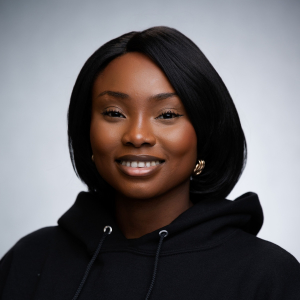
Itimi worked as an intern at the BBC World Service, on a project distributing public health information through WhatsApp during the Ebola crisis in West Africa. “It was my first real exposure to the power of digital platforms and the responsibility that comes with managing information at scale,” she says.
Later, while working in government analysing cyber intelligence related to modern slavery and digital crime, the dots started to connect. “I realised cybersecurity was not just about protecting systems. It was about protecting people and the information societies rely on every day,” she says.
What has changed most since she entered the field is access. “Cybersecurity used to feel like a closed world you somehow had to stumble into. Today there are bootcamps, community programmes, apprenticeships and far clearer career pathways. More importantly, women are entering the field from a much wider range of backgrounds, including law, psychology, policy and communications.”
While she acknowledges there are still issues, Itimi says the conversation around diversity in cybersecurity has matured significantly. “Organisations increasingly understand that diverse teams are not simply about representation. They are about resilience, better decision making and stronger security cultures.”
Upcoming Events
No events found.
Related content
What UK-EU cyber cooperation talks mean for cybersecurity
International Women In Cyber Day: UK Women Still Face Multiple Cultural Barriers At Work

LinkedIn's profile viewer data access sparks EU privacy debate

Industry urges reform to retain women in tech
Your Final Chance to Be Recognised: SC Awards Europe Entry Deadline Nears

Your Service Desk is the New Attack Vector
EU must totally rethink cyber defense, chief says
Confirm cancellation
Something went wrong.
An error occurred trying to play the stream. Please reload the page and try again.
CloseSign up benefits
Registering with SC Media is 100% free. Join tens of thousands of cybersecurity leaders today and gain access to the latest analysis shaping the global infosec agenda.
- Weekly newsletters featuring industry-leading insight
- Access to free cyber expert webinars and videos
- Privileged viewership of special reports, such as the Annual Cyber Salary Survey and Women of Influence